The History of the Epsom Derby
Discover the story of the Epsom Derby, from its aristocratic beginnings in 1780 to the champions, jockeys and unforgettable moments that shaped Britain’s greatest Classic.

 Horse Racing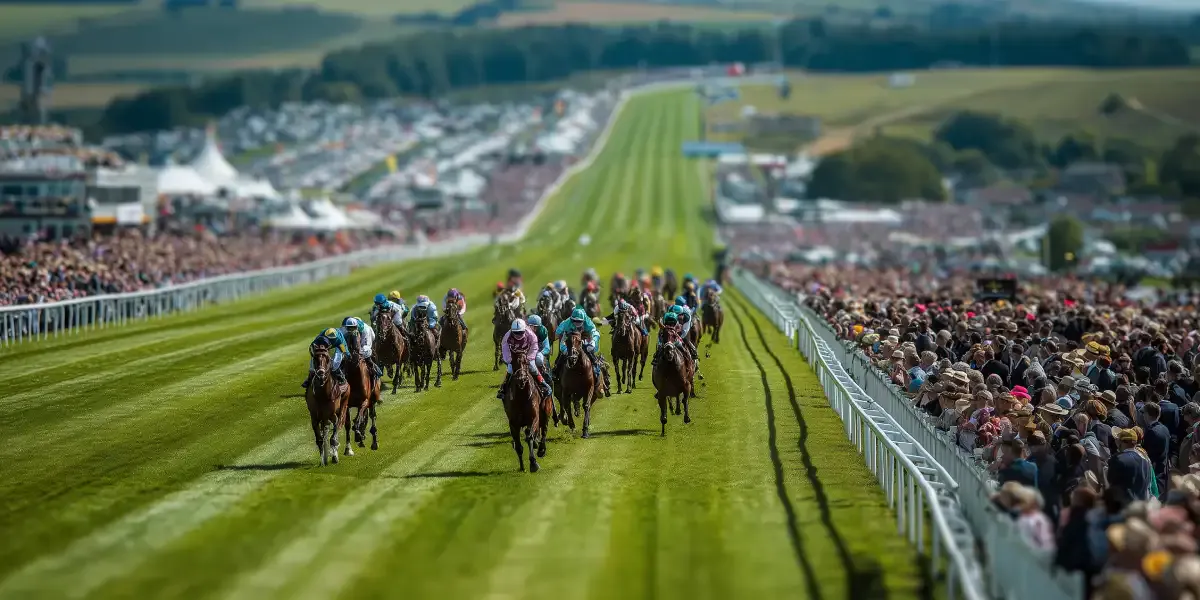
The History of the Epsom Derby
The Epsom Derby is one of the most famous races in the world and one of the true cornerstones of British sport. For over two centuries, it has been the race every owner, trainer and jockey dreams of winning.
Run at Epsom Downs Racecourse, the Derby is far more than just a flat race. It's a test of class, balance, stamina and nerve, staged on one of the most unusual racecourses in the sport. The camber, the downhill run and the demanding finish have made it a challenge unlike any other.
Winning the Derby does more than add a trophy to the cabinet. It can define careers, create legends and turn promising three-year-olds into racing immortals.
From its aristocratic beginnings to modern-day global attention, the Derby has built a history packed with unforgettable champions and iconic moments.
How the Derby Began
The story of the Derby starts in 1779 at a dinner party.
A group of wealthy racing enthusiasts, including Edward Smith-Stanley, 12th Earl of Derby and Sir Charles Bunbury, were discussing the idea of creating a new race for three-year-old horses.
The following year in 1780, the first running of what became the Derby took place at Epsom Downs.
There is a famous story that the race could have been called the Bunbury instead, with the final name supposedly decided by the flip of a coin. Whether entirely true or not, the Derby name stuck and racing history was made.
The first winner was Diomed, a horse who secured his place in history by becoming the original Derby champion.
At the time, nobody could have imagined the scale the race would eventually reach.
Why Epsom Became So Special
Part of what makes the Derby unique is the course itself.
Epsom Downs is unlike almost any other major racecourse. Horses face sharp undulations, a downhill section that builds speed quickly and a famous left-hand camber that can throw inexperienced runners off balance.
Then comes the final climb to the line, where races are often won or lost.
This means the Derby is not simply about the fastest horse. It's about the horse that can handle the track, stay the distance and deliver under pressure.
It also means jockeys play a huge role and shoud always be taken into account when placing your horse racing bets.
Riding Epsom well takes experience and confidence, which is why Derby-winning jockeys are held in such high regard.
The course itself is one of the reasons the race became so prestigious.
The Rise of Britain’s Greatest Classic
As the 19th century progressed, the Derby quickly became the biggest race in the British flat season.
Crowds grew year after year, with thousands travelling to Epsom to watch the action. By the Victorian era, Derby Day had become one of the biggest social events in the country, attracting royalty, politicians, celebrities and everyday racing fans alike.
Winning the Derby became the ultimate target for owners breeding thoroughbreds.
The race also helped shape the future of horse breeding. Successful Derby winners were seen as ideal stallion prospects, meaning victory could change not only a horse’s reputation but the bloodlines of the sport itself.
This combination of prestige and long-term importance made the Derby unlike any ordinary race.
Famous Early Winners
The Derby has always produced champions that captured public imagination.
One of the earliest legends was West Australian, who won in 1853 and became the first horse to complete the English Triple Crown by adding the 2000 Guineas and the St Leger.
Another famous name was Ormonde, unbeaten throughout his career and Derby winner in 1886, becoming one of the most admired horses of the Victorian era.
These early stars helped build the Derby’s reputation and turned it into the race every racing fan followed.
By the end of the century, it was already seen as one of the sport’s defining events.
Wartime Disruption and Survival
Like many major sporting events, the Derby was affected by both World Wars.
During World War One and World War Two, the race could not be run at Epsom as normal due to safety concerns and wartime restrictions. Temporary versions of the Derby were staged at Newmarket Racecourse instead.
These races were known as the New Derby and kept the tradition alive during difficult years.
Although the setting changed, the importance of the race remained.
When peace returned, so did the Derby at Epsom and its status only seemed to grow stronger with each generation.
Lester Piggott and the Modern Era
No individual shaped the modern Derby story more than Lester Piggott.
He won the race nine times, more than any jockey in history and became almost as famous as the horses he rode.
His victories included Never Say Die, Nijinsky, Roberto, The Minstrel and Shahrastani, spanning more than three decades of dominance.
Piggott’s calmness, timing and ability to deliver in the biggest races made him the ultimate Derby jockey.
His presence helped bring even greater attention to the race during the television era, turning Derby Day into a national sporting occasion for millions watching at home.
Even now, his record remains one of the sport’s greatest achievements.
Nijinsky and Triple Crown Greatness
Few Derby winners are remembered quite like Nijinsky.
Winning the Derby in 1970 under Lester Piggott, Nijinsky went on to complete the Triple Crown by also winning the 2000 Guineas and the St Leger.
He remains the last horse to achieve that feat in Britain, which shows just how difficult it is.
Nijinsky became an international superstar and one of the greatest racehorses of the modern era.
His Derby win wasn't just a Classic success, it was part of one of racing’s most famous campaigns.
Modern Champions and Global Attention
The Derby continues to attract global interest and remains one of the highlights of the international racing calendar.
Recent winners like Golden Horn, Adayar and Auguste Rodin have carried the race into the modern era, while trainers like Aidan O'Brien have built remarkable records in the Classic.
The race is still viewed as a major stepping stone for future champions, both on the track and at stud.
Winning the Derby remains one of the highest honours in flat racing.
Why the Derby Still Matters
More than 240 years after Diomed won the first running, the Derby still holds its place at the heart of British racing.
It combines history, prestige, sporting pressure and genuine unpredictability in a way few races can match.
Every winner becomes part of something bigger, a list that stretches back centuries and includes some of the finest horses the sport has ever seen.
That is why the Derby continues to matter.
It's not just about one afternoon at Epsom.
It's about legacy, reputation and the pursuit of racing greatness.
Bet £10 Get £10 Free Bet
Place a £10 5-fold Acca and Get a £10 Free Bet
New verified customers only. Opt-in required. Deposit £10 and earn £1 of Free Bet value for every £1 staked on accumulators of 5 or more selections with minimum odds of 1.25 (1/4) per selection. Min Reward: £1 Free Bet / Max Reward: £10 Free Bet. Cash in or claim within 48 hours of promo end. Free Bets expire 7 days after claim. 18+ GambleAware








 Login to play
BetWright © 2026
BetWright is a trading name of Onyx Gaming Limited, a company incorporated in England and Wales with company number 11033330. Registered office: The Coach House, Headgate, Colchester, United Kingdom, CO3 3BT. Onyx Gaming Limited is licensed and regulated in Great Britain by the Gambling Commission under account number #64666.
- Bangers N'Cash
Signup as and verifiy as an Advanced customer at BetWright to get exclusive access to opt-in rewards with our Bangers N'Cash rewards system where you can cash-in free bets and free spins every week!
- Safer Gambling
At BetWright we are committed to responsible gambling, that's why we offer a variety of tools to help you manage your gaming.
- Official Sponsorships
BetWright proudly stands as the Official Sponsor of Leyton Orient and Norwich City Football Clubs.