The History of the Grand National
Explore the rich history of the Grand National, from its first running in 1839 to legendary winners like Red Rum and Tiger Roll.

 Horse Racing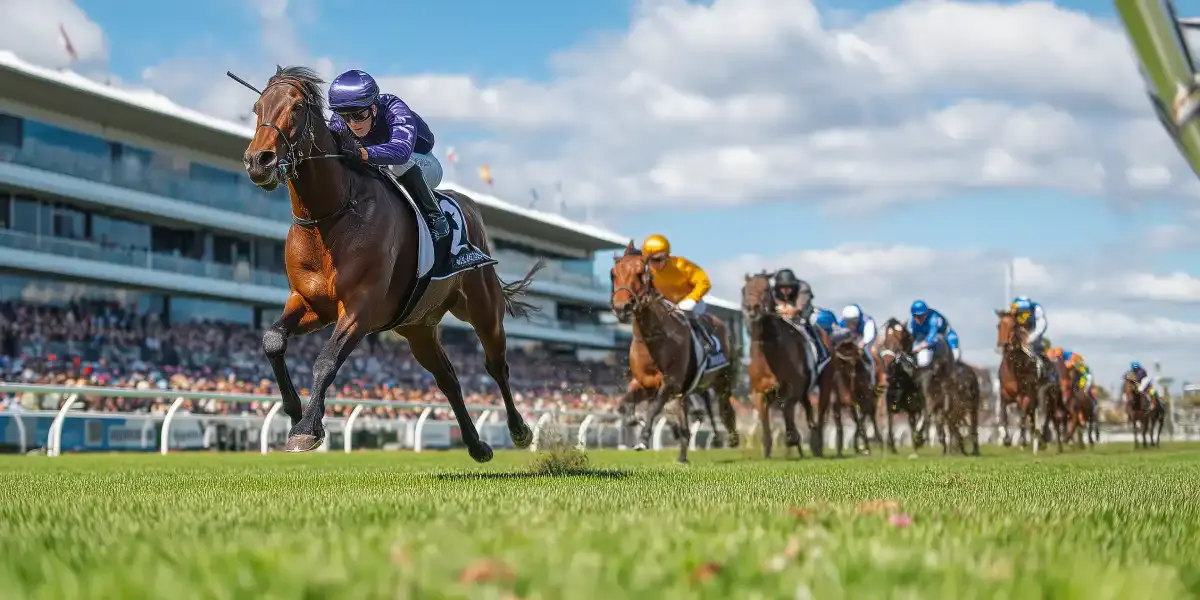
The History of the Grand National
Few sporting events in Britain carry the same history, drama and national attention as the Grand National. It's more than just a horse race, it's a tradition, a spectacle and for many people, the one day of the year they place a bet on horse racing.
Run at Aintree Racecourse, the Grand National has produced legendary horses, unforgettable finishes and stories that have become part of British sporting culture. From outsiders winning at huge odds to icons like Red Rum rewriting history, the race has always been about far more than favourites and form.
But how did it all begin?
The Grand National has changed enormously since its earliest days, evolving from a rough cross-country contest into one of the most famous races in the world. Its history is full of memorable moments, famous winners and the kind of chaos that only Aintree seems able to produce.
Where It All Started
The first officially recognised Grand National took place in 1839, although there is still debate around whether earlier races held at nearby Maghull should count as part of the same history.
Most racing historians recognise 1839 as the true beginning of the modern Grand National and that race was won by Lottery, trained by George Dockeray.
Back then, the race looked very different from the modern version. The course was rougher, fences were less refined and wealthy spectators were sometimes known to ride alongside the runners to watch the action more closely.
It was a far more unpredictable event but even then, the foundations of the National were clear, a long-distance test of stamina, jumping and nerve.
As the race grew in popularity, Aintree quickly became its permanent and iconic home.
The Victorian Era and Early Legends
During the 1800s, the Grand National established itself as Britain’s biggest steeplechase.
Horses like The Colonel and Abd-El-Kader became early stars, while jockeys such as George Stevens built records that still stand today.
Stevens remains the most successful Grand National jockey of all time with five victories between 1856 and 1870, a remarkable achievement that has never been matched.
This period also shaped many of the race’s traditions. The fences became more famous, crowds grew larger and the Grand National developed a reputation for producing stories that reached far beyond racing fans.
It was no longer just a sporting contest, it was becoming a national event.
The Race Through War and Change
Like much of British life, the Grand National was affected by both World Wars.
During World War One, the race was temporarily moved away from Aintree and held at Gatwick Racecourse between 1916 and 1918 due to wartime restrictions.
The same happened during World War Two, when Aintree was used for military purposes and racing was suspended there.
Despite these interruptions, the Grand National always returned and its popularity only seemed to grow stronger.
By the mid-20th century, it had become one of the biggest annual sporting events in the country, attracting huge crowds and national radio coverage before television eventually brought it into millions of homes.
The race was now part of British culture.
Red Rum and the Modern Golden Era
No horse changed the Grand National’s public image more than Red Rum.
Trained by Ginger McCain and first ridden to victory by Brian Fletcher, Red Rum won the race in 1973, 1974, and 1977 as well as finishing second in both 1975 and 1976.
His first victory remains one of the most famous finishes in racing history, chasing down Crisp after the final fence in dramatic style.
Red Rum became a household name far beyond racing circles. He was featured across national media, welcomed like a celebrity and turned the Grand National into something even bigger than it had been before.
For many people, he remains the first horse they think of when the race is mentioned.
His legacy still shapes Aintree today, with Red Rum buried beside the winning post on the Grand National course.
Famous Shocks and Outsider Winners
Part of what makes the Grand National so special is its unpredictability.
Unlike many major races dominated by favourites, Aintree has produced countless famous outsider winners over the years.
Foinavon famously won at 100/1 in 1967 after avoiding a huge pile-up at what is now known as the Foinavon Fence.
Mon Mome repeated the 100/1 shock in 2009, proving outsider victories were still possible in the modern era.
Then there was Tipperary Tim in 1928, whose victory followed the famous prediction that he would only win “if all the others fell”, which almost happened.
These stories helped create the National’s unique reputation, where every horse feels like it has a chance and every race writes its own drama.
Safety Changes and the Modern Race
As the sport evolved, so did the Grand National.
The race’s famous fences have always been part of its identity but safety improvements over the years have changed how they are built and approached. Fence construction has been modified to reduce risk for horses and jockeys, while field sizes and qualification rules have also been adjusted.
These changes have sometimes divided opinion, with traditionalists wanting the old challenge preserved and others welcoming a safer modern version of the race.
The balance between history and welfare remains an important part of the Grand National conversation.
Even with these changes, the race still holds its unique character and remains the biggest test in jump racing.
Tiger Roll and a New Generation
In recent years, Tiger Roll became the modern horse to capture the public imagination.
Trained by Gordon Elliott and ridden by Davy Russell, Tiger Roll won back-to-back Grand Nationals in 2018 and 2019, becoming the first horse since Red Rum to achieve the feat.
Smaller than many of his rivals but full of determination, Tiger Roll became a fan favourite and reignited public fascination with the idea of a repeat champion.
His success reminded racing fans just how difficult back-to-back wins really are.
It also showed that even in the modern era, the Grand National can still produce true sporting icons.
Why the Grand National Still Matters
More than 180 years after Lottery won the first official running, the Grand National remains one of the biggest races in the world.
It attracts seasoned racing fans, once-a-year punters and millions of casual viewers who simply want to be part of the occasion.
Its appeal lies in the balance between history and unpredictability. Every year adds a new chapter but every year also feels connected to the legends that came before.
That's why the Grand National continues to matter.
It's not just a race run over fences at Aintree.
It's part of British sporting identity, where history, drama and hope meet every spring.
Bet £10 Get £10 Free Bet
Place a £10 5-fold Acca and Get a £10 Free Bet
New verified customers only. Opt-in required. Deposit £10 and earn £1 of Free Bet value for every £1 staked on accumulators of 5 or more selections with minimum odds of 1.25 (1/4) per selection. Min Reward: £1 Free Bet / Max Reward: £10 Free Bet. Cash in or claim within 48 hours of promo end. Free Bets expire 7 days after claim. 18+ GambleAware








 Login to play
BetWright © 2026
BetWright is a trading name of Onyx Gaming Limited, a company incorporated in England and Wales with company number 11033330. Registered office: The Coach House, Headgate, Colchester, United Kingdom, CO3 3BT. Onyx Gaming Limited is licensed and regulated in Great Britain by the Gambling Commission under account number #64666.
- Bangers N'Cash
Signup as and verifiy as an Advanced customer at BetWright to get exclusive access to opt-in rewards with our Bangers N'Cash rewards system where you can cash-in free bets and free spins every week!
- Safer Gambling
At BetWright we are committed to responsible gambling, that's why we offer a variety of tools to help you manage your gaming.
- Official Sponsorships
BetWright proudly stands as the Official Sponsor of Leyton Orient and Norwich City Football Clubs.