The Different Tennis Court Surfaces Explained
Tennis is played on three main court surfaces, grass, clay and hard courts, each of which affects ball speed, bounce and playing style. This guide explains the key differences between the surfaces and why they are so important for tennis betting and match analysis.

 Tennis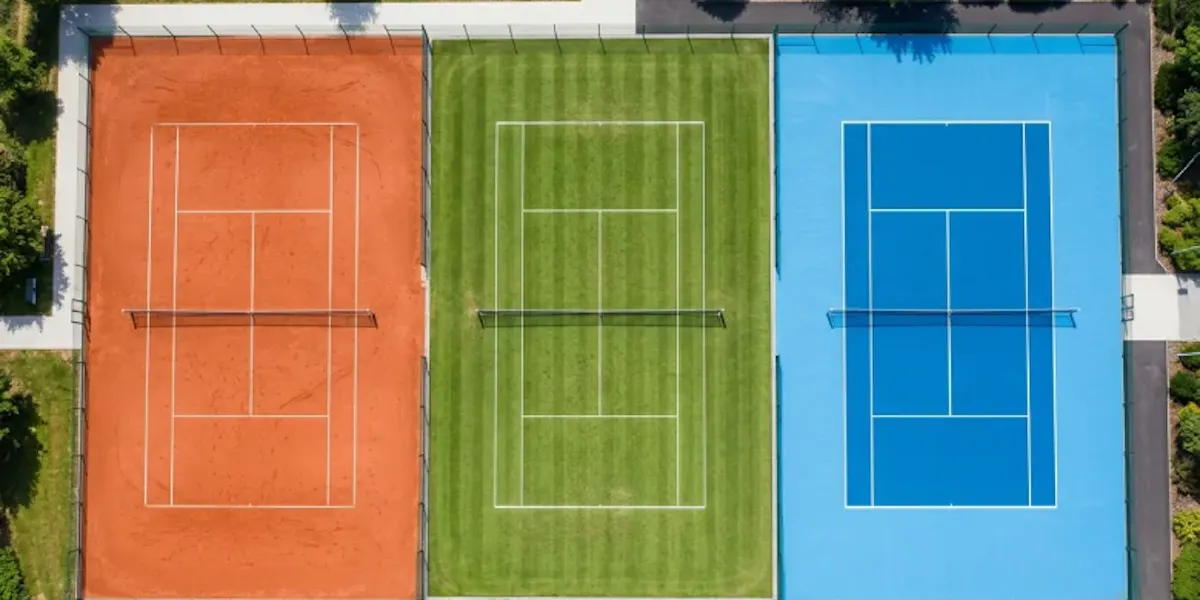
The Different Tennis Court Surfaces Explained
One of the things that makes tennis unique is that the game is played on different court surfaces throughout the season. Unlike many sports, where conditions remain largely the same, tennis players must adapt their style, movement and tactics depending on the surface beneath their feet.
The three main court surfaces used in professional tennis are grass, clay and hard courts. Each offers a different playing experience and can significantly influence match outcomes.
Understanding court surfaces is essential for fans, players and anyone interested in tennis betting, as some players thrive on certain surfaces while struggling on others.
Why Do Court Surfaces Matter?
Different surfaces affect how the ball behaves after it bounces.
Factors influenced by the surface include:
- Ball speed
- Bounce height
- Player movement
- Length of rallies
- Effectiveness of different playing styles
As a result, a player who dominates on one surface may not necessarily achieve the same success on another.
This is why surface form is one of the most important factors to consider when analysing a tennis match.
Grass Courts
Grass is the oldest surface in tennis and remains one of the most iconic.
Characteristics of Grass Courts
Grass courts typically produce:
- Faster ball speeds
- Lower bounces
- Shorter rallies
- Greater emphasis on serving
Because the ball stays low after the bounce, players often have less time to react compared to other surfaces.
Which Tournament Uses Grass?
The most famous grass-court tournament in the world is Wimbledon.
Wimbledon is the only Grand Slam still played on grass, making it one of the most distinctive events in the tennis calendar.
Which Players Benefit?
Grass generally suits players with:
- Powerful serves
- Strong volleys
- Aggressive attacking styles
Players who can win points quickly often perform particularly well on grass.
Clay Courts
Clay courts are often considered the slowest surface in professional tennis.
Characteristics of Clay Courts
Clay courts usually produce:
- Slower ball speeds
- Higher bounces
- Longer rallies
- Greater emphasis on endurance
The surface allows players to slide into shots, creating a very different style of movement compared to grass and hard courts.
Which Tournament Uses Clay?
The most famous clay-court event is the French Open, held annually in Paris.
The French Open is widely regarded as one of the toughest tests in tennis due to the physical demands of clay-court play.
Which Players Benefit?
Clay often favours players who:
- Excel in long rallies
- Possess strong defensive skills
- Generate heavy topspin
- Have excellent fitness levels
Patience and consistency are often rewarded more on clay than on faster surfaces.
Hard Courts
Hard courts are the most commonly used surface in professional tennis.
Characteristics of Hard Courts
Hard courts generally offer:
- Medium ball speeds
- Consistent bounce
- Balanced playing conditions
- A mix of attacking and defensive opportunities
Because they sit between grass and clay in terms of speed, hard courts are often viewed as the most neutral surface.
Which Tournaments Use Hard Courts?
Two of the four Grand Slams are played on hard courts:
Many ATP and WTA Tour events are also played on hard courts throughout the season.
Which Players Benefit?
Hard courts tend to reward all-round players who can adapt to different situations.
Success on hard courts often requires a balance of:
- Strong serving
- Effective movement
- Reliable baseline play
- Tactical flexibility
Which Surface is the Fastest?
Generally speaking, the surfaces rank as follows:
- Grass (fastest)
- Hard court
- Clay (slowest)
However, modern court technology means there can be variations between tournaments. Some hard courts play faster than others, while weather conditions can also affect speed and bounce.
Why Surface Form Matters in Tennis Betting
Court surface is one of the most important factors in tennis betting.
Some players build their reputations on clay, while others achieve their best results on grass or hard courts.
Before placing a bet, it's often worth considering:
- The player's record on the surface
- Recent performances on similar courts
- Historical results at the tournament
- Playing style suitability
A player ranked lower in the world may still be favoured if competing on their strongest surface against an opponent who struggles in those conditions.
Which Surface Is the Most Difficult?
There is no definitive answer, as each player has different strengths.
Many professionals consider clay the most physically demanding due to the length of rallies and matches. Others find grass the most challenging because points unfold so quickly and opportunities to recover are limited.
Ultimately, success comes from adapting to the unique demands of each surface.
Summary
Grass, clay and hard courts all play a major role in shaping the professional tennis season. Each surface creates different challenges and rewards different styles of play, which is one reason tennis remains such a fascinating sport to follow.
For fans and bettors alike, understanding court surfaces can provide valuable insight into player performance. Whether it's the speed of Wimbledon, the endurance test of the French Open, or the balanced conditions of the Australian and US Opens, court surface often has a bigger impact on match results than most people realise.







 Login to play
BetWright © 2026
BetWright is a trading name of Onyx Gaming Limited, a company incorporated in England and Wales with company number 11033330. Registered office: The Coach House, Headgate, Colchester, United Kingdom, CO3 3BT. Onyx Gaming Limited is licensed and regulated in Great Britain by the Gambling Commission under account number #64666.
- Bangers N'Cash
Signup as and verifiy as an Advanced customer at BetWright to get exclusive access to opt-in rewards with our Bangers N'Cash rewards system where you can cash-in free bets and free spins every week!
- Safer Gambling
At BetWright we are committed to responsible gambling, that's why we offer a variety of tools to help you manage your gaming.
- Official Sponsorships
BetWright proudly stands as the Official Sponsor of Leyton Orient and Norwich City Football Clubs.